


Project cost isn't the most reliable selection criterion — both underpriced and overpriced quotes predict outcome quality equally poorly. Below are four criteria that, in practice, are much better indicators of whether it's worth working with a given contractor.
1. Portfolio — look at live sites, not screenshots
Pretty screenshots in a portfolio say nothing about code quality, load speed, or whether the site still works a year after delivery. Instead of just browsing, do this:
- open 2–3 real sites from the portfolio and run them through PageSpeed Insights — if a contractor's own examples score poorly, yours will too;
- check whether those sites are still being updated — a project abandoned right after delivery hints at what support for yours will look like;
- ask about a project similar in scale and scope to yours, not just the flashiest case in the portfolio.
2. Process — transparency matters more than methodology
It doesn't matter whether a contractor calls their process Agile, Scrum, or just "phases" — what matters is whether you can see the real project status at any point. Signs of a healthy process:
- fixed stages with deadlines and a defined output for each, not a vague "we'll have it done in 2 months";
- access to a working version of the project during development, not just the final handoff;
- decisions and revisions documented in writing — agreements made over a call and never written down usually turn into a dispute about "who meant what."
3. Communication — how fast and clear responses are before you even start
How a contractor communicates during the discussion phase is the best predictor of how communication will go during development. It's a red flag if, during the sales conversation, nobody asks clarifying questions about your business and target audience and instead immediately sends a generic proposal — that signals an assembly-line approach with no real engagement with your task.
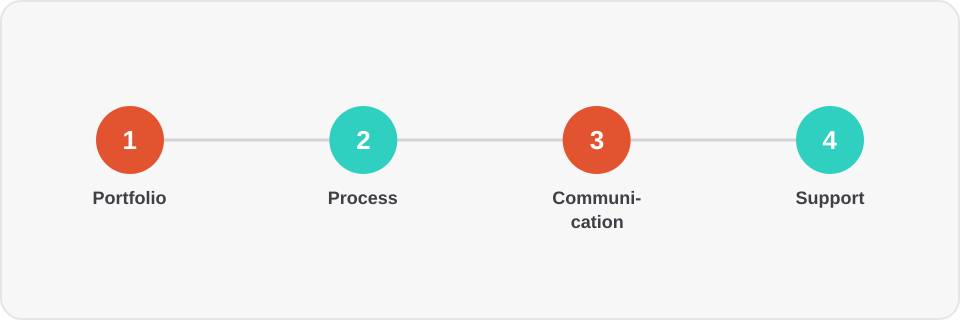
4. Post-launch support — read it in the contract, don't take it on faith
A site doesn't turn into a static artifact after delivery — it needs fixes, dependency updates, and a response to bugs. Clarify upfront:
- whether a support period is included after delivery, and exactly what it covers;
- how fast the contractor responds to critical production bugs — hours or weeks;
- whether you retain ownership of the code, domain, and access credentials, or whether they stay "attached" to the contractor — this is critical for your business's independence down the line.
Questions worth asking at the first meeting
A short list that quickly filters out the wrong contractors:
- "Show me a site you delivered over a year ago — how is it holding up now?"
- "What's included in post-launch support, and what does it cost separately?"
- "Who will actually be doing the work — you, or a subcontractor of yours?"
- "What happens if a bug turns up after delivery that the spec didn't explicitly cover?"
Bottom line
A good contractor isn't the one promising the lowest price and the shortest timeline — it's the one who's transparent about the process, honest about limitations, and keeps answering questions after the money has already changed hands. If you'd like to discuss your project and get an honest timeline estimate — get in touch.